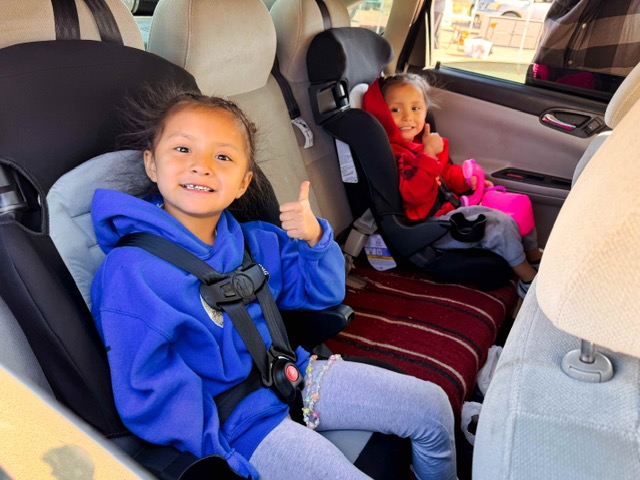
At the close of the 2025–2026 school year, Eve’s Fund for Native American Health Initiatives helped 91 children ride more safely through its Buckle Up Navajo Booster Seat Giveaway and Car Seat Safety Event at Baca/Dlo’Ay Azhi Community School in Prewitt, New Mexico.
The event served 53 families, distributed 78 booster seats, 13 car seats and provided hands-on child passenger safety education and car seat inspections. Through Eve’s Fund’s ThinkFirst Navajo injury prevention program, families learned how to properly protect children on every trip.
Protecting Native Children on the Road
Motor vehicle crashes remain a leading cause of preventable injury and death among Native American children. According to the Centers for Disease Control and Prevention, American Indian and Alaska Native children experience motor vehicle fatality rates significantly higher than those of other children in the United States.
The good news is that proper use of car seats and booster seats can dramatically reduce the risk of serious injury or death. That’s why Eve’s Fund and its partners continue to bring child passenger safety education directly to Native communities.
The message at the heart of the event was simple:
“Niháa łchíní nihíł dadiyin — Our children are sacred.”
Every family receiving a booster seat signed a safety pledge to buckle children correctly on every trip, keep children in the back seat through at least age 13, and replace expired or damaged seats. Every participating family signed the pledge.
“I pledge to keep my child properly restrained, use our booster seat correctly,
and buckle up on every trip, every time.”
Community Partners Made the Event Possible
WATCH OUR BUCKLE UP NAVAJO BOOSTER SEAT GIVEAWAY VIDEO HERE
The success of Buckle Up Navajo reflected the strength of community collaboration. Baca/Dlo’Ay Azhi Community School and Principal Robert McDonald, III and his enthusiastic staff helped promote the event, with more than half of participating families learning about it through the school.
Certified Child Passenger Safety Technicians conducted inspections and provided education to families. Support came from the New Mexico Department of Transportation, Safer New Mexico Now, Indian Health Service, ThinkFirst New Mexico, the New Mexico Governor’s Commission on Disability Brain Injury Advisory Council, the New Mexico State Police, the Navajo Police Department, and numerous local volunteers.
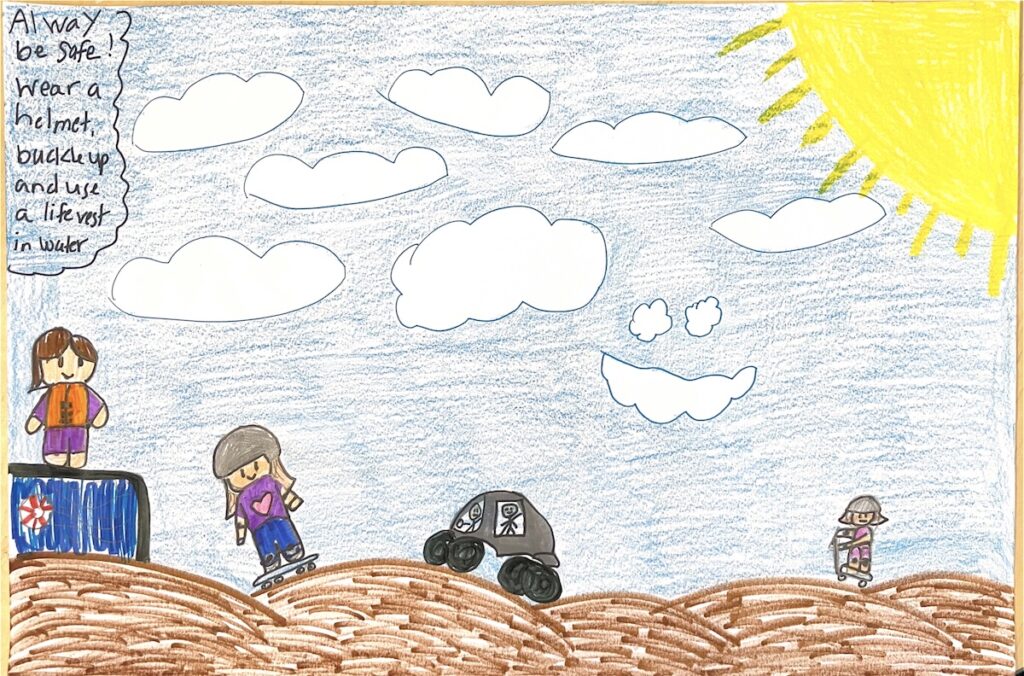
Students contributed safety-themed artwork, while volunteers assisted with registration, traffic flow, and Navajo-language translation.
What We Learned One Month Later
Eve’s Fund conducted follow-up outreach approximately one month after the event to determine whether families were still using their booster seats.
The responses were encouraging. Most families reported that they were using the seats regularly and understood the importance of keeping children properly restrained.
The follow-up also highlighted ongoing challenges. Many Navajo children travel in multiple vehicles driven by parents, grandparents, relatives, and other caregivers. As a result, a booster seat may not always be available when a child changes vehicles.
These conversations reinforced the importance of providing not only booster seats, but also education that helps families make child passenger safety a priority wherever children travel.
Every Child, Every Ride
Whether the trip is across town or across the reservation, the right child safety seat can save a life. Eve’s Fund encourages parents, grandparents, and caregivers to use age- and size-appropriate car seats and booster seats on every ride and to seek assistance from a Certified Child Passenger Safety Technician whenever they have questions about proper installation.
Buckle Up Navajo was funded by the New Mexico Governor’s Commission on Disability and its Brain Injury Advisory Council, with technical support from community and state partners committed to protecting Native children.
To learn more about Eve’s Fund and the ThinkFirst Navajo injury prevention program, visit www.evesfund.org.
We hope you will sign up for our news updates. We promise not to overload your
inboxes, but we will try to keep you informed about our most important news.